Shimijimi: Dyed and Inlaid Textiles by Shigeki Fukumoto
-
Overview

Exhibition opens Thursday, April 30, 2026
- Opening Reception at 35 N Moore Street, TriBeCa: April 30, 2026, 5–8 PM
- Private viewing by appointment only.
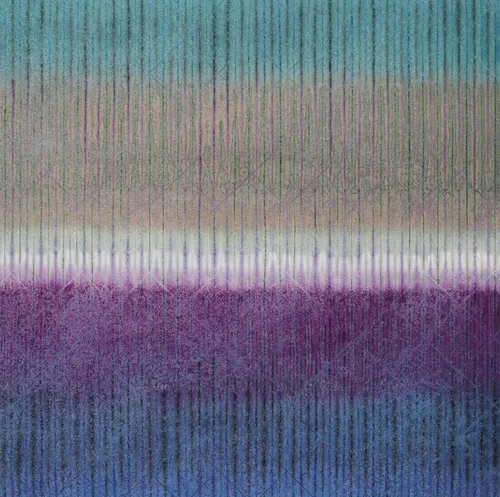
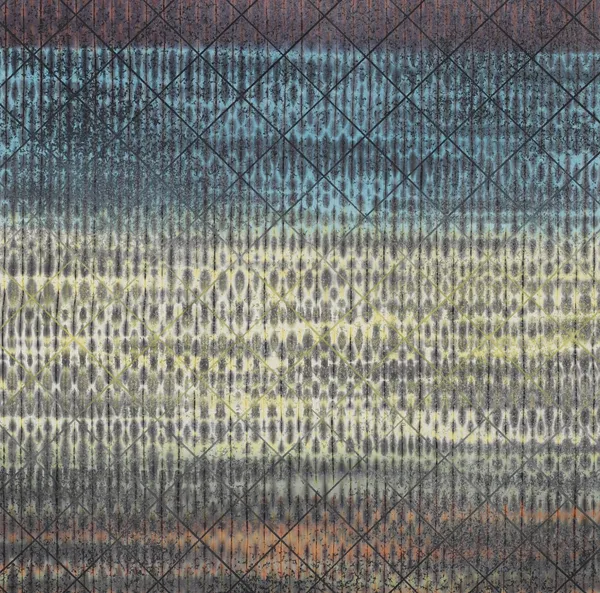
NEW YORK, NY – Ippodo Gallery is pleased to present Shimijimi: Dyed and Inlaid Textiles by Shigeki Fukumoto, the master Japanese textile dyer's debut solo exhibition at Ippodo Gallery in TriBeCa, New York from April 30 to June 6, 2026. Fukumoto's vivid textiles are stretched and inlaid into complex patterns and brilliant colors using synthetic dyes and the artist's unique wax resist technique.
-
Press Release
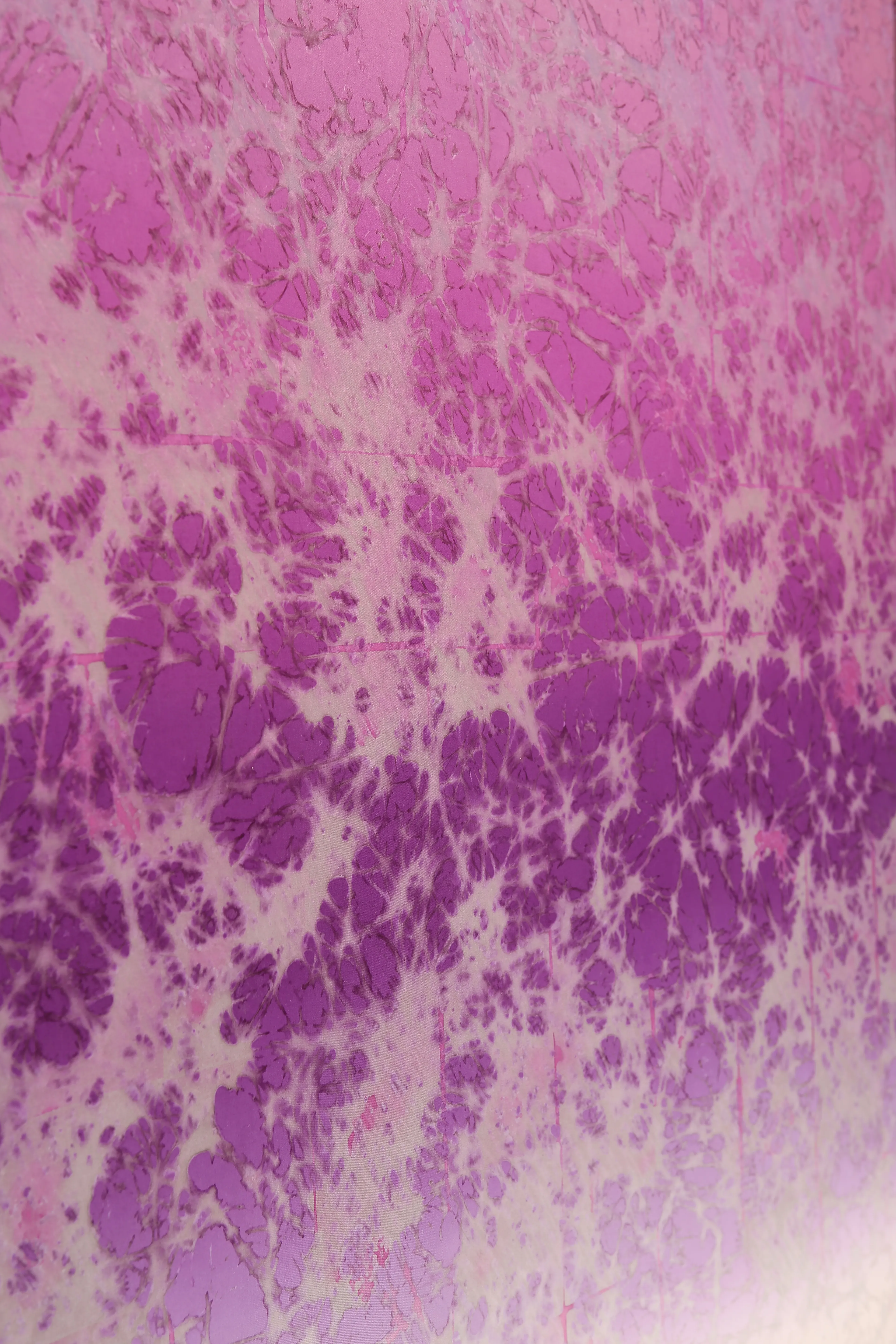
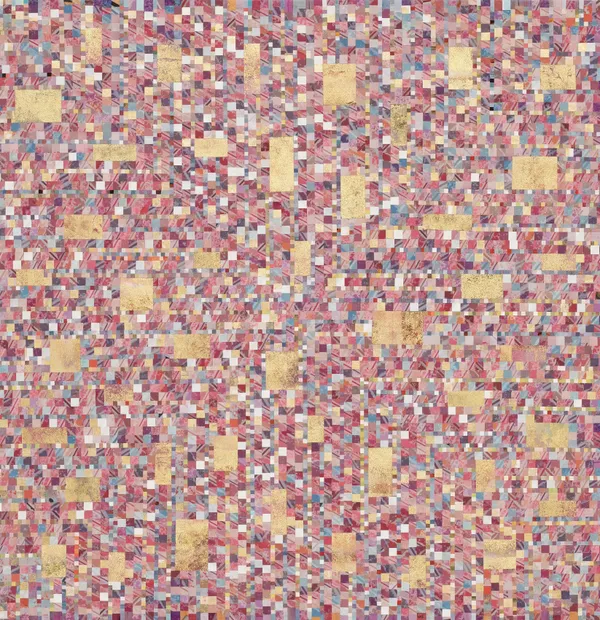
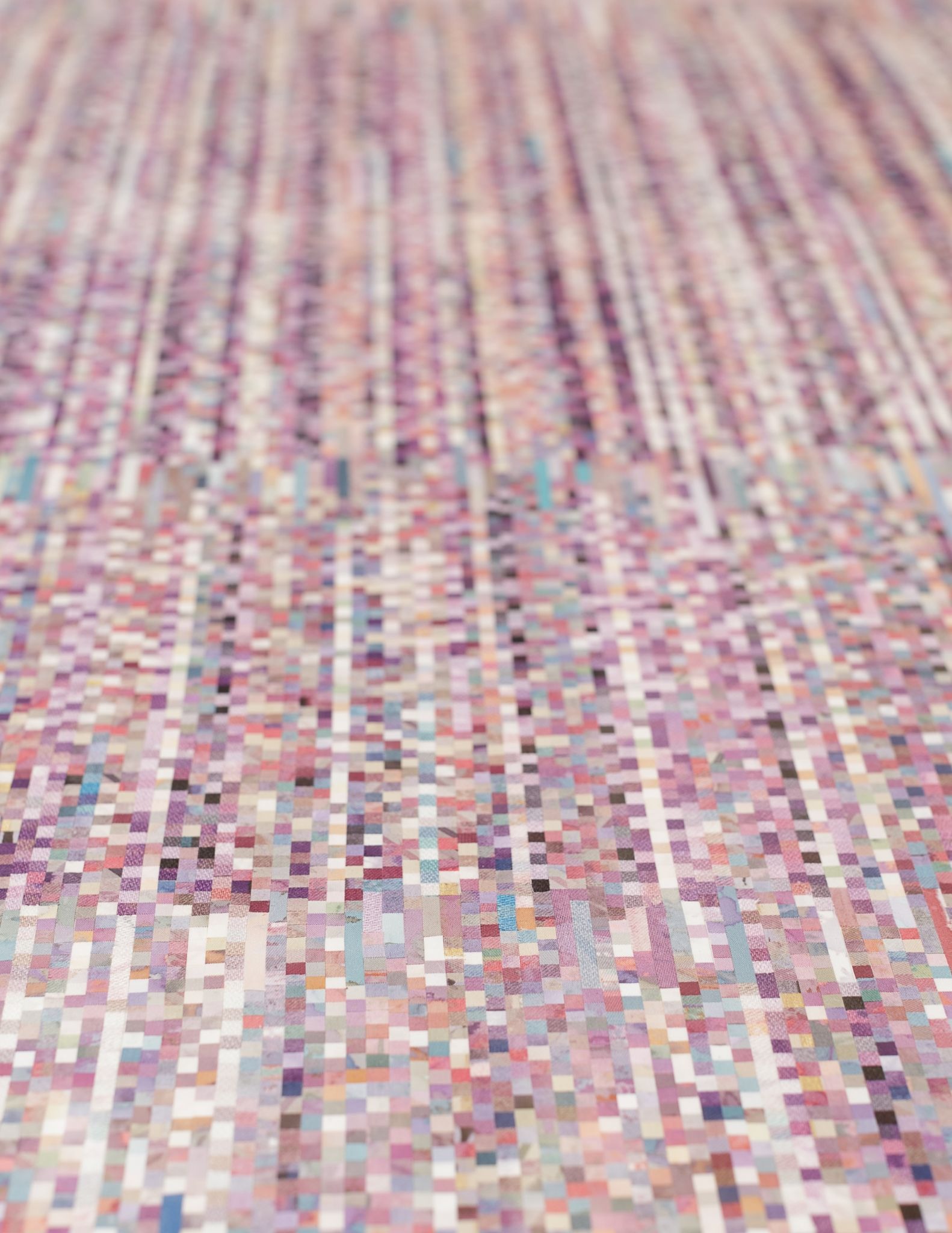
Ippodo Gallery is pleased to present Shimijimi: Dyed and Inlaid Textiles by Shigeki Fukumoto, the master dyer's first New York solo exhibition and debut at Ippodo Gallery, from April 30 to June 6, 2026. The exhibition of dyed Japanese cloth features more than twenty two-dimensional works and folding screens from across three decades of his distinguished career. Blurring the line between painting and the traditions of Japanese textile, Fukumoto's unique wax resist (rozome) and cloth inlay (nunozoukan) techniques, using precious Turpan cotton, explore expressions of color, light, and layering within the long-established language of dyeing (senshoku).
Shigeki Fukumoto (b. 1946) provides a philosophy and process that cannot be defined by classical ideas of textile. His sensational dyes permeate beyond the surface of the fabric and sink into the fibers in contrast to the interwoven picture-making of Western textile arts. Fukumoto hails from Kyoto, where textile dyeing is more rich in history and there is a greater density of traditional cloth dyers than anywhere else in Japan. Fukumoto took up the mantle of his family's kimono dyeing business from the mid 1960s until 1987 after studying oil painting at university. Mastering the strict techniques of wax-resist cloth dyeing—a cultural heritage dating back one-thousand years—Fukumoto began to share his constantly expanding expertise as a professor at Osaka University of Art.
As dye is introduced to cloth, the nature of the material is to spread unabated unless carefully controlled. Fukumoto approaches each wax resist dyed work in careful balance between technical process and the exploration of self-expression. Step by step he prepares the cloth and color dyes to guide the unruly nature of the medium to accomplish his intended expression. Fukumoto's meticulous preparation creates opportunities for controlled entropy where nature otherwise tends towards chaos.
Wax resist (rozome) is the core method of his many styles born out of six decades of dyeing experience. Among them are the application of dye with a brush (hikizome), a blurring of soft colors (boke, naruhodo-zome), and the arranging of thousands of dyed-and-cut cloth, inlaid using Japanese washi paper, into criss-crossing sceneries that evoke a sense of light and movement from the varied levels of gloss applied to the cloth (nunozoukan). "Dyeing offers rich potential when we think of it not as a craft, but rather as a medium of free expression."
Shigeki Fukumoto earned his MFA in western-style painting at Kyoto City University of Arts in 1970, and joined the Osaka University of Arts faculty as an associate professor in 1989, then full professor in 1997. Since 1970, Fukumoto has exhibited his dyed textiles widely in Asia and the United States. Among his public collections include the Cleveland Museum of Art and Museum of Fine Arts, Boston (United States of America); National Museums of Modern Art in Kyoto and Tokyo (Japan); Ilmin Museum and the Cheongju Korean Craft Museum (South Korea).
Fukumoto's explorative fieldwork brought him to Oceania, where he continues to return since 1969. Most revered among his studies are the dyeing traditions of Papua New Guinea, Melanesia, Vanuatu, and the Solomon Islands. The "magnificent line" that appears repeatedly in his works as a representation of the horizon draws upon his extensive travels to the region. Selected items from Fukumoto's one-thousand item collection from the region, linking to his life's work, will join the exhibition. Ippodo Gallery welcomes the artist, traveling from Kyoto, Japan, for his premiere New York solo exhibition for an Opening Reception on April 30, 2026 from 5:00-8:00PM and an Artist Talk and Workshop on May 2, 2026.
Please contact Mayu Evans (mayu@ippodogallery.com) for more information and images, and Jesse Gross (jesse@ippodogallery.com) for sales inquiries.
mail@ippodogallery.com | +1 (212) 967-4899 | 35 N Moore St, New York, NY, 10013
Images courtesy of Shigeki Fukumoto.
-
Director's Letter
The art of dissolving boundaries and permeating the heart
— Shoko Aono, Spring 2026
For Shigeki Fukumoto, dyeing is a medium of spiritual expression—a way to crystallize a fleeting, fragile, yet fragrant inner world into visible form. He has a deep understanding of the two fundamental qualities of dyes: their ability to flow freely (fluidity) and their quality of letting light pass through (transparency). Through his work, he seeks to manifest the phenomenon of the formless heart being dyed exactly as it is, to its very depths. This is not a mere coating of the surface; it begins with confronting the natural providence by which dye penetrates into an inner truth, and is born from the quiet practice of waiting for the essence of a thing – how it wishes to be – to reveal itself.
Born in Kyoto, a city vibrant with the breath of kimono artisans, Fukumoto initially sought his creative roots in Western painting. However, guided by the bonds of his family trade, he went on to master the esoteric depths of kimono dyeing: rozome (the secret art of wax-resist) and hikizome (the mastery of drawing dye across fabric with a single, sweeping brushstroke). Since 1969, he has traveled more than a dozen times to Papua New Guinea and other South Pacific islands, collecting handmade textiles (tapa and netted bags) and crafts from the pre-weaving era. Through these journeys, Fukumoto has woven a unique theory of dyeing culture, demonstrating the origins of Japan’s indigenous aesthetic and leaving behind a vast body of research and literature.
Since ancient times in Japan, the state of being deeply moved or touched to the core has been described by the word shimiru (to permeate or to soak into). Shimiru, nijimu, shimu... so many Japanese words for human emotion are rooted in dyeing terminology. This serves as evidence that Japan’s dyeing culture is deeply embedded in the bedrock of our civilization and intimately connected to our sense of touch.
Fascinated by the way dyes naturally spread according to the laws of nature, and the radiance of intersecting fibers that capture light, Fukumoto seeks to bring the essence of shimiru, the ancient Japanese skin-sensation of permeation, into the present day. Knowing the soul of cloth intimately, he devises original techniques and manipulates his tools with absolute freedom. His work includes his signature Naruhodo (“I see/Indeed”) dyeing that captures the dynamism of dye, Nokori-ga (“Lingering Scent”) and Utsuri-ga (“Transferred Scent”) techniques, where wet dyed cloth is pressed against white fabric to create richly expressive mottling, and Nuno-Zogan (Cloth Inlay), where he breaks the taboo of cutting fabric into fragments and breathes new life into them.
Distinct from tableaux, tapestries, or conventional fiber work, Fukumoto is carving out a textile horizon that has never been seen before. His work is an attempt to quietly dissolve the boundaries between nature, daily life, and art. The dyeing that emerges is a new spiritual frontier of creativity that permeates the heart deeply—truly, Shimijimi.
Images courtesy of Shigeki Fukumoto. -
Selected Works for Preview
-
Events